
Based in Marwayne, Alberta, Six Strong Ag has spent the past 15 years building a consulting...
What Does the SWAT in SWAT MAPS Stand For?
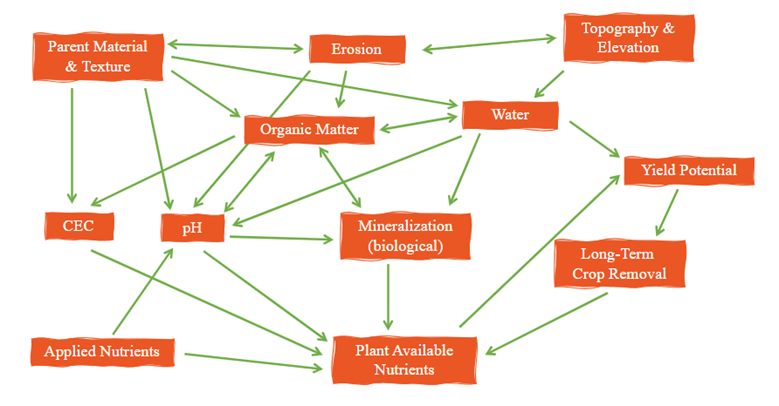
Many people may wonder why SWAT MAPS variable rate is named the way it is. While it may sound like just a “cool name,” it stands for three critical factors for unlocking a strong and stable variable rate system: Soil, Water, and Topography. These factors are essential for applying inputs such as seed, fertilizer, soil amendments and even soil applied herbicides within soils to provide the best ROI. Soil, water, and topography are all factors that have influence over and interact with one another, such as seen in Figure 1. These interactions impact both yield and fertilizer response of a crop and should be looked at in depth when making variable rate recommendations. Other tools such as yield data and satellite imagery show you variability without explaining the why. Unlike SWAT MAPS. They do not differentiate the most important factors in determining fertilizer behaviour and responses: soil potential.
Figure 1. Soil water and topography interactions that influence soil fertility.
Soil is the most important factor to look at when it comes to a strong, stable and successful variable rate program. Many soil components influence the yield of a crop from year to year and determines how a crop will respond to added fertility.
Two key factors are topsoil depth and organic matter levels, which both influence mineralization rates and must be considered when making fertilizer recommendations. Some fields can have pockets of extreme organic matter levels (peat) that have excess nutrient mineralization rates, causing severe lodging and uneven crops. These areas need to be treated separately from other areas within a field and often need little to no nitrogen fertilizer applied.
Soil salinity and solonetzic areas can also greatly impact how a crop will yield and respond to added fertility. Identifying where these occur within a field and treating them separately Is a good way to save on fertilizer costs, as they typically have excess nutrients.
Soil texture is another important soil feature that should be considered when making fertilizer recommendations. Separating soil texture differences by zone can greatly improve fertilizer ROI. Areas that are sandy will be more moisture limited and have less mineralization compared to areas that have higher clay content. Sandy soils have lower CEC (ability to hold cations) than clays, and also have greater potential for leaching mobile nutrients like nitrate and sulfate. These differences should all be incorporated into a variable rate fertilizer recommendation.
{ImageLink}
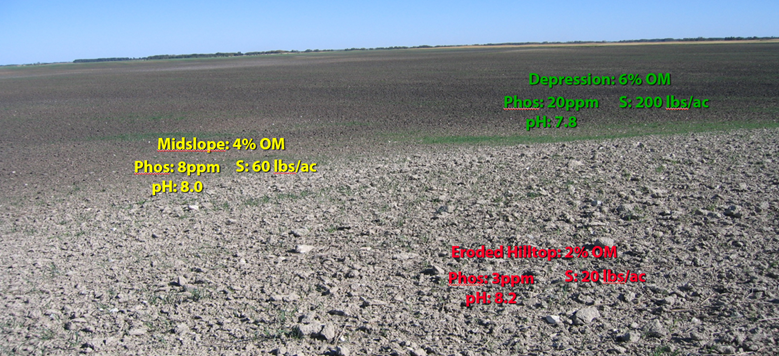
Figure 2. Different landscape positions within a field along with their soil properties.
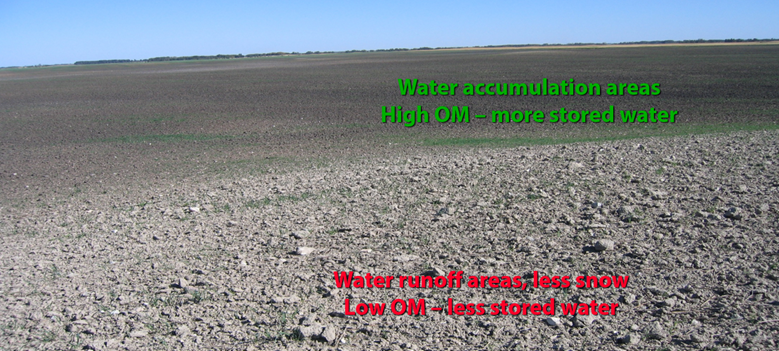
Water is the most important factor for crop growth, yield, fertilizer response, and nutrient-use efficiency. When using variable rate, you need to be able to separate out areas in a field where there will be different degrees of available moisture (Figure 3). Zones with limited, adequate, or excess moisture should be managed separately when it comes to applied fertilizer and seed rates. Knolls or sand/gravel seams are commonly moisture limited and should be treated differently than mid-slope positions and depressional areas which typically have more moisture. However, areas with adequate or excess moisture shouldn’t necessarily receive excessively high fertilizer rates, either, as these areas are more prone to lodging and can cause uneven staging.
{ImageLink}
Figure 3 Example of water dynamics in a field.
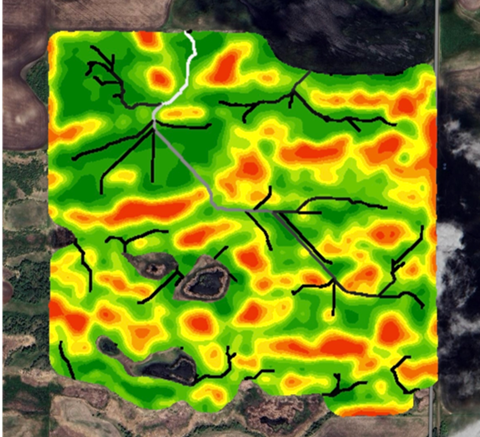
Topography is the third crucial factor that SWAT MAPS variable rate uses. Topography is the landscape position within a field (knolls, mid slopes, or depressions). Topography influences how the water sheds or collects and how it moves through a field (Figure 4). Topography has also influenced erosion history in fields. When summer fallow was a common farm practice, we ended up with a lot of eroded knolls due to the movement of topsoil from knolls to lower slope positions.
{ImageLink}
Figure 4. Example of water flow accumulation through a SWAT MAP field.
Organic matter levels within a field typically follow topographical position, with levels increasing as you go downslope. In some cases, this is due to historical farming practices such as such as tillage, while other cases are natural occurrences such as peat depressions and gravel/sand ridges. Soil pH also varies with landscape position. In regions with calcareous soils, eroded knolls usually have higher pH due to exposed subsoil with containing calcium carbonates, or natural lime. In other regions we find pH is influenced more by texture, with sandier soil types being most acidic. Topography influences soil fertility through the movement of water containing mobile nutrients such as nitrogen and sulphur. The movement of topsoil and organic matter will impact the overall nutrient availability and mineralization in different landscape positions. Finally, the overall differences in soil pH from land scape positions will impact the availability of all nutrients.
Many tools in the agriculture industry – such as yield mapping and satellite imagery – can be used for making variable rate decisions, but they are not a stable or standalone approach that should be taken when it comes to fertilizer and seed rates. These methods show us historical field performance and variability, but they lack the “why.” Soil, Water and Topography are the three main factors that influence fertilizer response and yield potential. Understanding these factors through a SWAT MAPS variable rate approach helps explain the “why” and helps to unlock your soil potential.