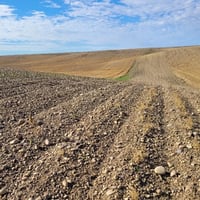

Eroded knolls – those high spots within a field where crop production struggles year after year –...
Fall Mapping = Smarter Planning for 2026
You are interested in mapping, but are certain times of the year better for mapping than others? As for data quality, the answer is no, not really. The SWAT BOX can collect good data at almost any time of year. There are other logistical considerations for your farm, though, that usually point to immediately post-harvest as best.
Mapping new fields in the fall gives our SWAT MAPS team adequate time to work with your field maps in preparation for spring. Mapping early allows more time for you to work directly with our team to gain an understanding of each map, and soil potential, before prescriptions are made for the next crop year. Although there is nothing wrong with mapping in the spring, as that is also encouraged, mapping in the fall may have a few more benefits than waiting until spring.
Weather and soil conditions
When the mapping process starts in the fall, weather and soil moisture conditions are typically more favourable for the mapping truck to reach every part of a field. Mud or snow causes challenges for the mapping trucks (not so much for the SWAT BOX itself), making fall more reliable for collecting complete data on every part of the field. Spring mapping works well in situations where farms pick up new fields over the winter, but consider the window to map, soil test, get results, and compile a full plan prior to seeding is narrow.
Once the mapping truck collects data from each field, the agronomist can begin ground truthing the map layers. When ground truthing, agronomists use differences in soil, weeds, stubble, landscape position, imagery, or yield maps ensure the SWAT MAP accurately represents the soil, water, and topography variability. Following ground truthing, zone samples are taken. These three in-field tasks are extremely important to get right and should not be rushed.
Give yourself the time you need
Soil sampling in the fall can also allow ample time to make decisions about fertilizer. If fall fertilizer is applied prior to SWAT mapping your field, there is missed potential for fertilizer savings and optimum placement of nutrients. SWAT MAPS give the answers to ‘why’ the crop is yielding the way it is in certain parts of your field. We can determine what should be managed going forward with this map to maximize your soil potential. Whether its soil amendments, increased or decreased application of seed or nutrients, understanding the information gathered from each soil zone determines how we proceed into creating variable rate prescriptions.
Optimize your plans for next year
Winter is a great time to build a relationship with your SWAT MAPS service provider, setting yourself up for success for the next crop year. Whether it’s trying variable rate for the first time or annual adjustments to your variable rate input plan, spending time speaking with a SWAT certified Precision Agronomist about your goals is extremely valuable.
Reach out today at www.swatmaps.com/contact to get your fall 2025 acres booked so you can go into 2026 with greater confidence and a complete understanding of your soils.